

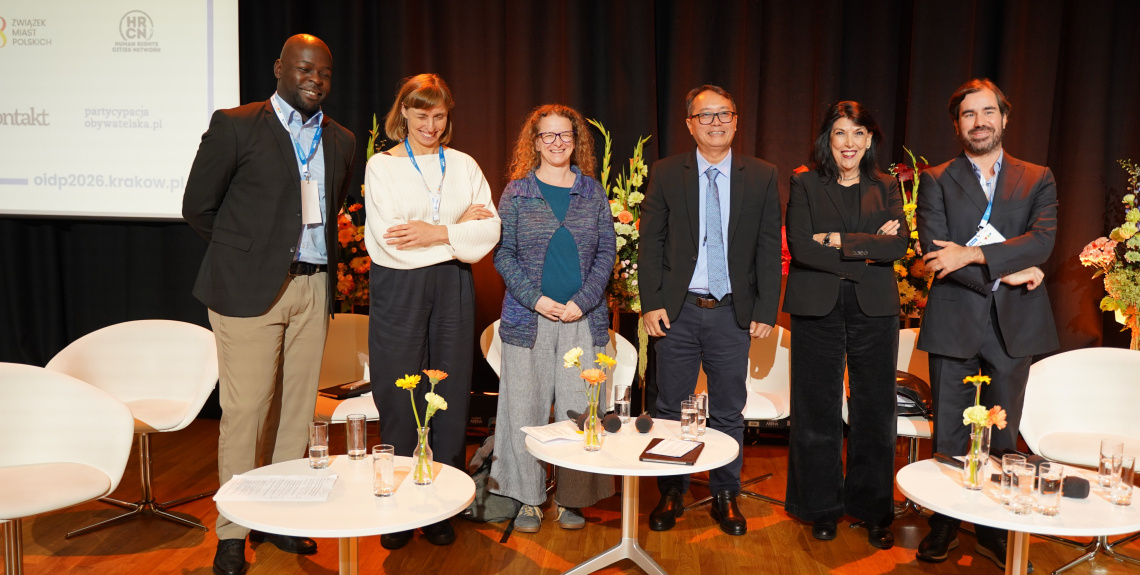
United Cities and Local Governments (UCLG), through its Committee on Social Inclusion, Participatory Democracy and Human Rights (CISDPDH), participated in the 25th Conference of the International Observatory on Participatory Democracy (OIDP), held in Kraków, Poland, from 21 to 23 September 2026. Under the theme of democratic renewal and the future of participatory democracy, the Conference brought together local and regional governments, civil society, practitioners, academics and democratic innovation actors to discuss how participation can respond to the growing challenges facing democratic societies.
As part of the Conference programme, the CISDPDH and OIDP jointly organized the session “Turning Rights into Action: Local Pathways to Democratic Renewal”, held on 21 September. The session explored how cities can strengthen democracy, rebuild trust and advance inclusion through human-rights-based local governance, connecting local experiences with the growing Human Rights Cities movement and the New Global Charter-Agenda for Human Rights in the City.
At a time of increasing democratic strain, social fragmentation, exclusion and shrinking civic space, the session highlighted the role of local and regional governments as democratic actors capable of translating rights into concrete policies, institutions, services and relationships with communities.
Connecting human rights and participatory democracy
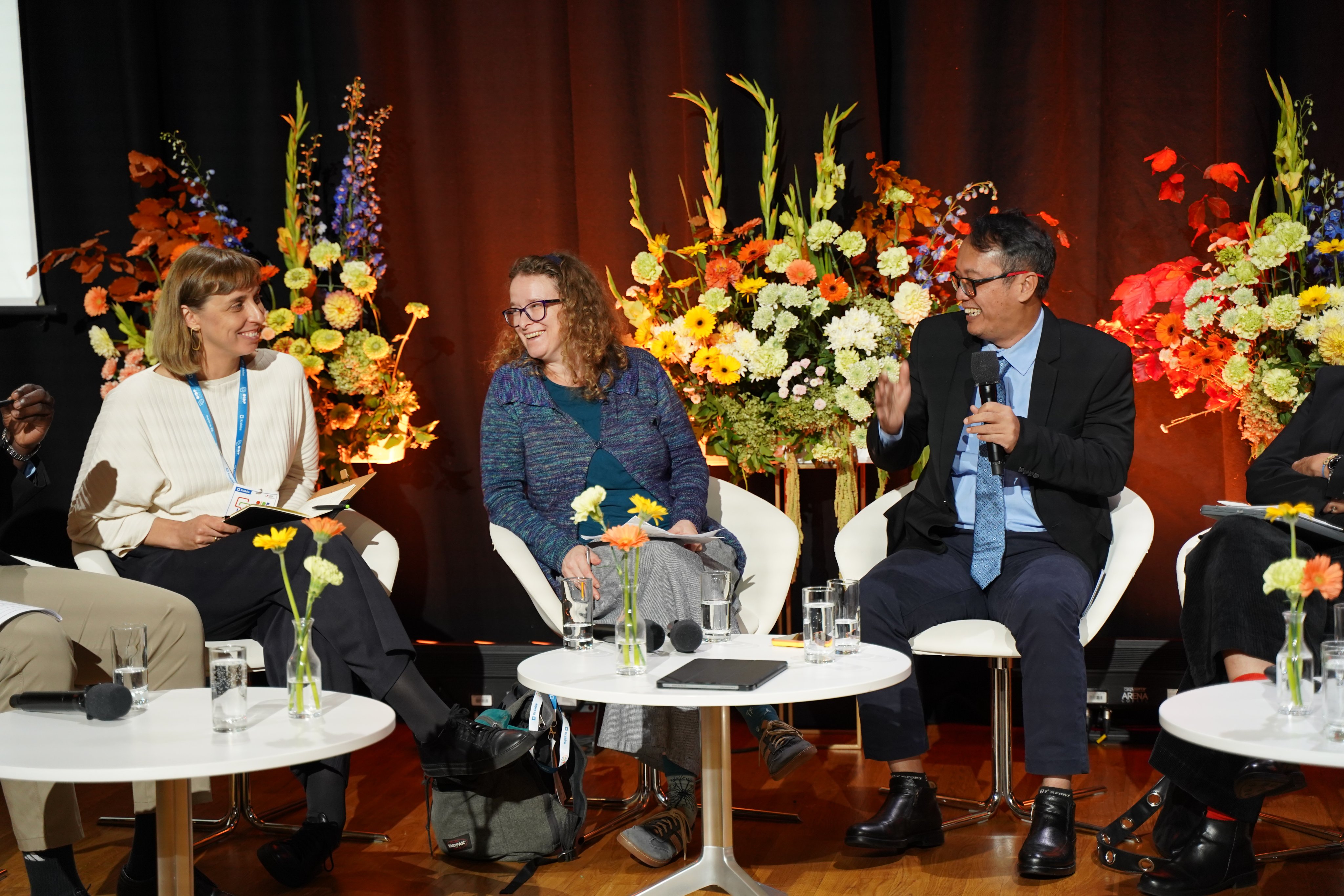
The session explored how human rights and participation can reinforce one another in everyday local governance. Speakers shared experiences related to equality, anti-discrimination, social inclusion, participatory governance and access to services, highlighting the importance of ensuring that democratic institutions respond to the realities and needs of diverse communities.
From Gdańsk, Deputy Mayor for Social Development and Equal Treatment, Monika Chabior, presented the city's experience of developing participatory practices rooted in equality and inclusion, including its Equal Treatment Centres. These centres provide support to people experiencing different forms of discrimination and connect them with relevant services and organisations. Chabior emphasised the importance of looking beyond individual interventions and asking: “What is going to change? How will it affect people's lives?”
Tessza Udvarhelyi, Deputy Mayor of the 8th district (Józsefváros) of Budapest, described the development of a model of participatory local governance centred on sustainability, participation and social justice. The district has established structures including an Equal Opportunities Office and an Office of Community Participation, alongside participatory budgeting, community-based planning, support for civil society and volunteering.
These experiences illustrated that participation is not only about creating new consultation mechanisms. It also requires institutional structures, political commitment and resources that allow residents and civil society to have a meaningful role in shaping local policies.
From human rights principles to local action
The experience of Vienna, presented by Human Rights Commissioner Shams Asadi, offered another perspective on embedding human rights within local governance. Vienna's experience as a Human Rights City has involved working with civil society and NGOs to examine policies, structures and institutions through a human rights lens.
Asadi stressed that formally becoming a Human Rights City is only the beginning: “Having the label or the name is easy, what is hard is to deserve it and continue deserving it.”
The discussion also highlighted the importance of bringing human rights considerations into areas that do not always fall neatly within traditional human rights structures, including child poverty, child trafficking, insecurity and cyber security. Asadi underlined the need to connect participation and democracy with human rights across public institutions and civil society.
From Indonesia, Fouad Jamil, Senior Stakeholder Engagement Specialist at Kota Kita highlighted the importance of bringing participation “from the community up”, particularly when addressing the needs of vulnerable groups. He also reflected on how local practices can influence national policy, with participatory budgeting providing one example of an approach adopted by local governments before being taken up at national level.
Monitoring and evidence for local human rights
The session also introduced the DeCiDE project, presented by Marshall Wanimo, Project Coordinator of the Human Rights Cities Network. The project is developing a monitoring approach to localise the EU Charter of Fundamental Rights, working with local and regional governments and civil society.
The initiative aims to strengthen the capacity of ten European cities to monitor public service delivery through participatory and inclusive approaches, strengthen consultation with civil society, and build knowledge and capacity around the EU Charter of Fundamental Rights.
As part of this work, the project is developing four human rights indicators and generating evidence together with local governments, civil society and political actors. The exchange highlighted the potential of such tools to support cities in identifying gaps, strengthening monitoring capacities and translating wider human rights frameworks into local practice.
The discussion also pointed to the value of connecting different city-led initiatives and learning from one another. As participants noted, local governments operate in very different contexts, making peer exchange, adaptation and learning essential to advancing human rights-based governance.
Human Rights Cities and the New Global Charter-Agenda
Throughout the session, participants connected these local experiences with the broader Human Rights Cities movement and the New Global Charter-Agenda for Human Rights in the City.
The exchange highlighted how the Charter-Agenda can provide a common framework for cities seeking to translate human rights commitments into local policies and practices, while participatory democracy can help ensure that these policies are shaped together with the communities they affect.
The discussion also reflected the broader work of UCLG and CISDPDH to localise human rights and strengthen the role of local and regional governments, including through the global campaign “10, 100, 1,000 Human Rights Cities and Territories by 2030”.
Building trust through local democracy
A recurring theme throughout the session was trust: trust in institutions, trust between governments and communities, and trust in people's capacity to participate and shape their societies.
The experiences presented in Kraków showed that strengthening local democracy requires more than formal participation mechanisms. It means creating inclusive institutions, addressing discrimination and inequality, investing in public services, supporting civil society and ensuring that people can see how their participation connects to concrete action.
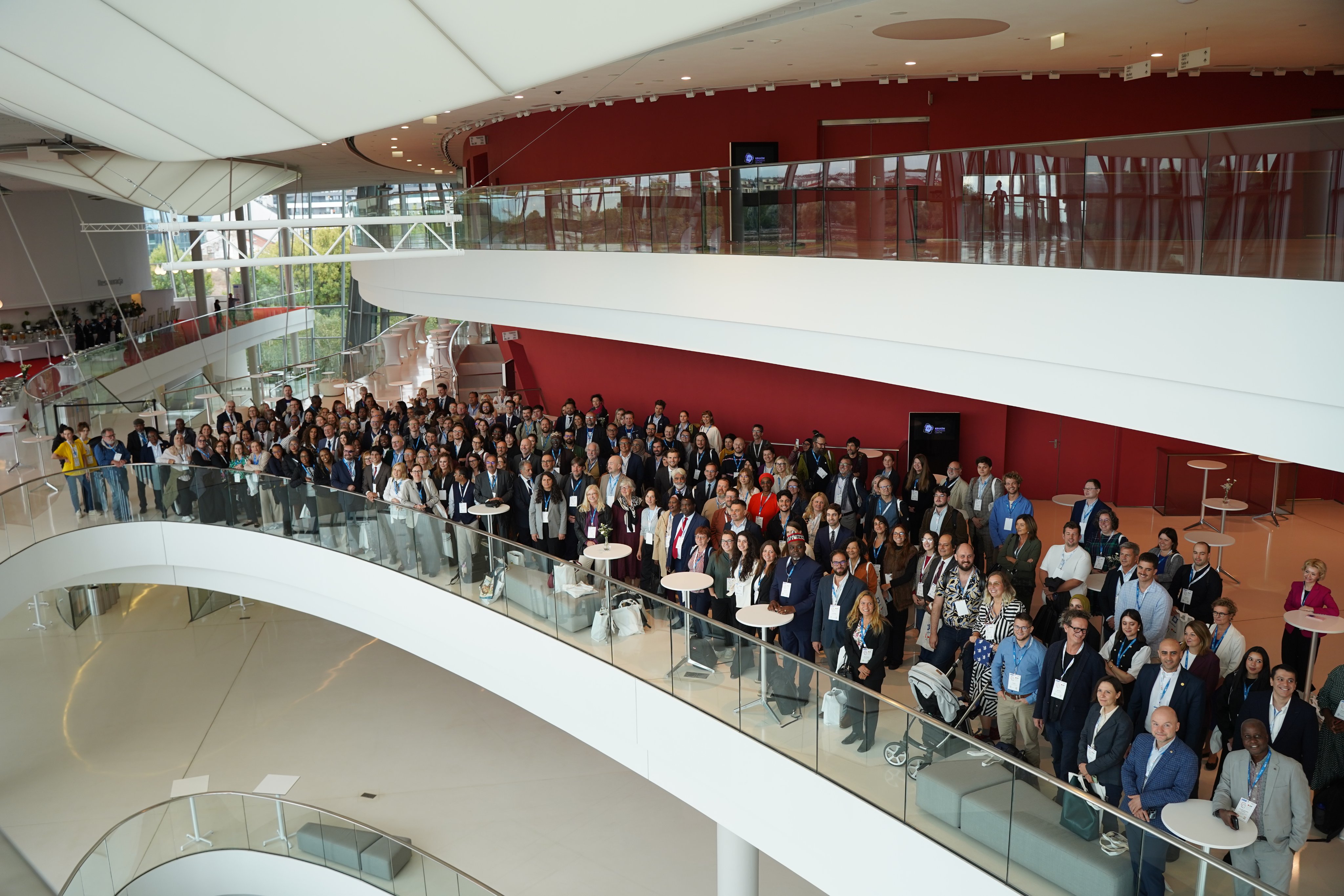
The CISDPDH's participation in the OIDP Conference therefore provided an opportunity to bring together the human rights and participatory democracy communities around a shared agenda for democratic renewal.
As Shams Asadi concluded, regardless of whether the focus is human rights, democracy or participation, “trust is the key word for anything we do: trust in institutions, trust in ourselves.”
The exchange in Kraków strengthened connections between the OIDP community, the Human Rights Cities movement and the wider UCLG agenda on local democracy and human rights, while highlighting the importance of turning global frameworks into practical local action.
Discover more about the OIDP Conference here.
View the OIDP Conference Flickr album here.