

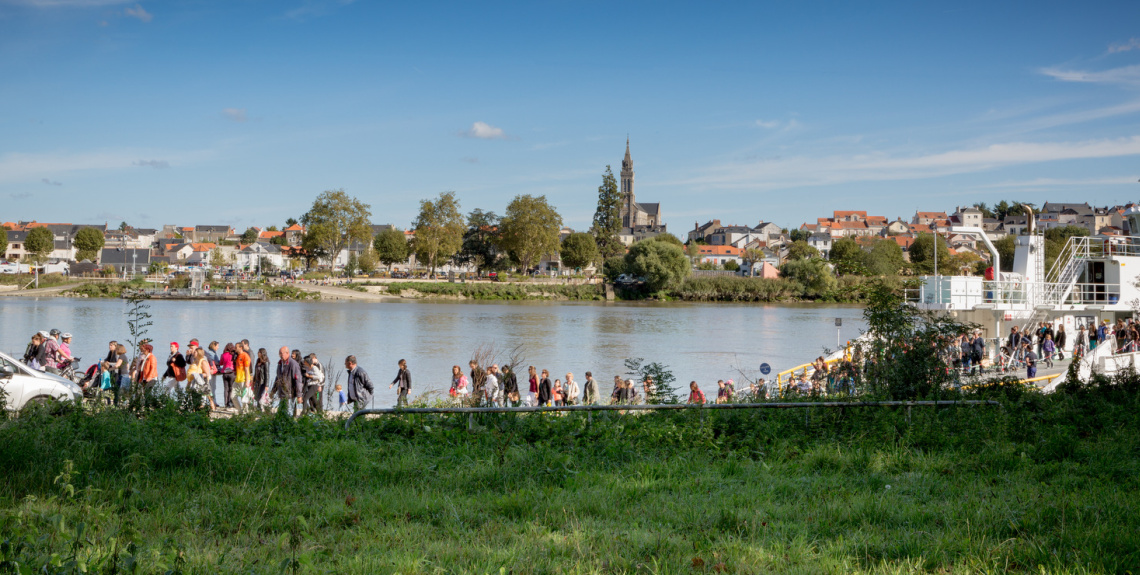
The role of local governments is indeed essential in promoting, fulfilling, and respecting human rights—on the one hand, by upholding international human rights protection standards within their territories, and on the other, by participating in the global governance of human rights: from the local to the global.
Local governments can activate several levers through i) associations operating in their territory, ii) public policies, particularly in the areas of solidarity, culture, youth, the elderly, disability, migrant reception, etc., and iii) their positions on international current events through opinion pieces, communications, and by setting up decentralized cooperation.
-
In a local authority, for example, the fight against discrimination is reflected in schools, in playgrounds, in sports, in school cafeterias, in associations, at the level of municipal services, and among elected officials.
-
The human rights framework allows stakeholders to reflect not only on what actions to take but also on how to implement them.
The "1% Homelessness" program, adopted by the Nantes metropolis, is a powerful example of action to facilitate access to housing for all.
The reception of an asylum seekers’ center (CADA) by the city of Saint-Brevin is also a way to take a stand on migrant reception and change public attitudes.
Writing an editorial in a municipal newsletter can help convey values and get citizens thinking about broader topics (international news, social change).
Respect for human rights is the foundation for building a connected society, one that respects differences (skin color, social status, gender, disability, age, etc.) and the living world (environment, etc.).
If all local governments around the world adopted and upheld human rights, the world would be at peace and the planet at rest.
Every local authority can play its part in building a peaceful world that respects life—just like the little hummingbird in the parable.
At a time when French lawmakers are debating immigration legislation—one that right-wing and far-right parties aim to make ever more repressive and inhumane (such as by cutting funding to human rights organizations); At a time when the far right is gaining strength in many countries; At a time when infanticidal wars are being waged in various parts of the world; At a time when genocides are being perpetrated in different countries— It is urgent to loudly and clearly uphold the Declaration of Human Rights and unite in order to live with dignity and solidarity on this fragile planet, without submitting to existing lobbies and while preserving our full integrity. Climate change will lead many people from the Global South to migrate to the Global North. Yet these countries are not responsible for this disruption, having contributed little to greenhouse gas emissions. It is therefore important that we stand in solidarity and quickly learn how to welcome, share, and find solutions together to be as resilient as possible. From Sudan to Ukraine to the Gaza Strip, it is urgent to redirect warring nations away from their deadly, power-driven objectives and instead to unite for an urgent and necessary shift toward peace, to build together a livable planet for our children.
This campaign is essential to help each of us reflect—and to move from the local to the global.
-
Access to housing for all: reception of women victims of domestic violence in emergency housing; housing of unaccompanied minors and migrants in vacant homes with social support provided by associations with a social mission.
-
Access to basic services: implementation of food distribution and a solidarity clothing bank; establishment of energy vouchers for people in precarious situations.
-
Fight against discrimination:
Support, guidance, and funding for associations with a solidarity mission: setting up a community garden to foster social ties ("Le Champ des Possibles"); collaboration with an aid association for the most vulnerable, especially migrants ("Solidarité à Indre").
Organization of the Solidarity Festival in collaboration with these associations.
Creation of a "Handi Group" to make the city more inclusive through appropriate urban planning.