

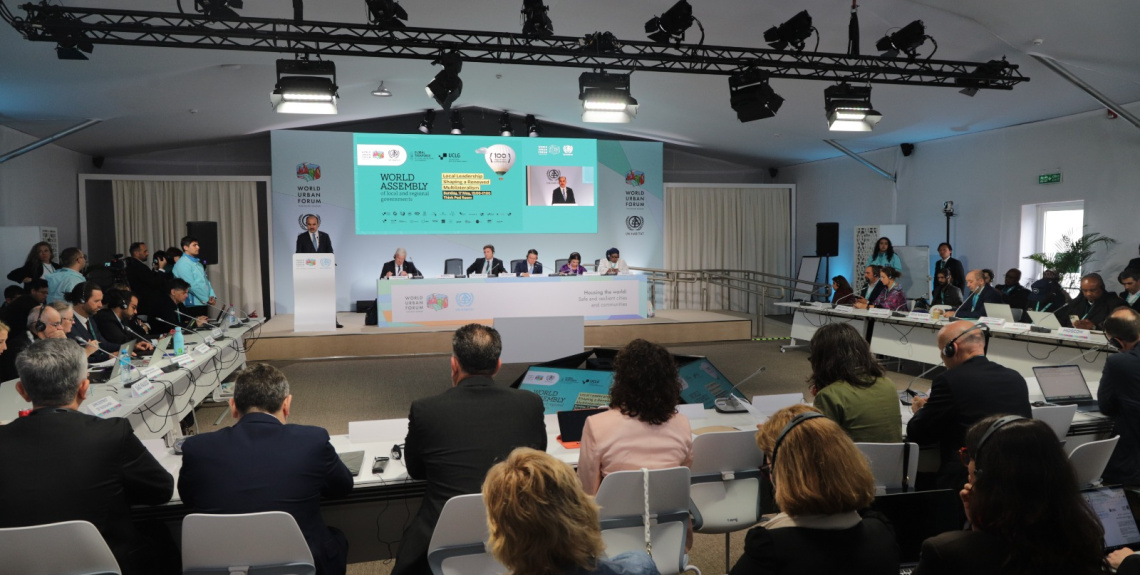
United Cities and Local Governments (UCLG) participated in the World Urban Forum 2026 (WUF13), held in Baku, Azerbaijan, from 17 to 22 May 2026. Convened under the theme “Housing the World: Safe and Resilient Cities and Communities”, the Forum brought together local and regional governments, international organizations, civil society, academia, and urban practitioners to explore how housing can drive more inclusive, equitable, and sustainable urban development.
As the world’s leading global conference on cities, WUF serves as a key platform for advancing the New Urban Agenda and the urban dimensions of the Sustainable Development Goals (SDGs). This year’s edition placed the global housing crisis at the centre of discussions, emphasizing housing not only as a human right, but also as a foundation for resilient, liveable, and just cities. The Forum examined how housing intersects with broader urban systems and integrated planning, including land and tenure security, climate adaptation, affordability, and informality.
Local Leadership Shaping a Renewed Multilateralism
As at every edition of the Forum, UCLG and the Global Taskforce of Local and Regional Governments (GTF) convened the World Assembly of Local and Regional Governments (WALRG), the self-organized political mechanism through which local and regional governments articulate their shared vision and priorities within global policymaking processes.
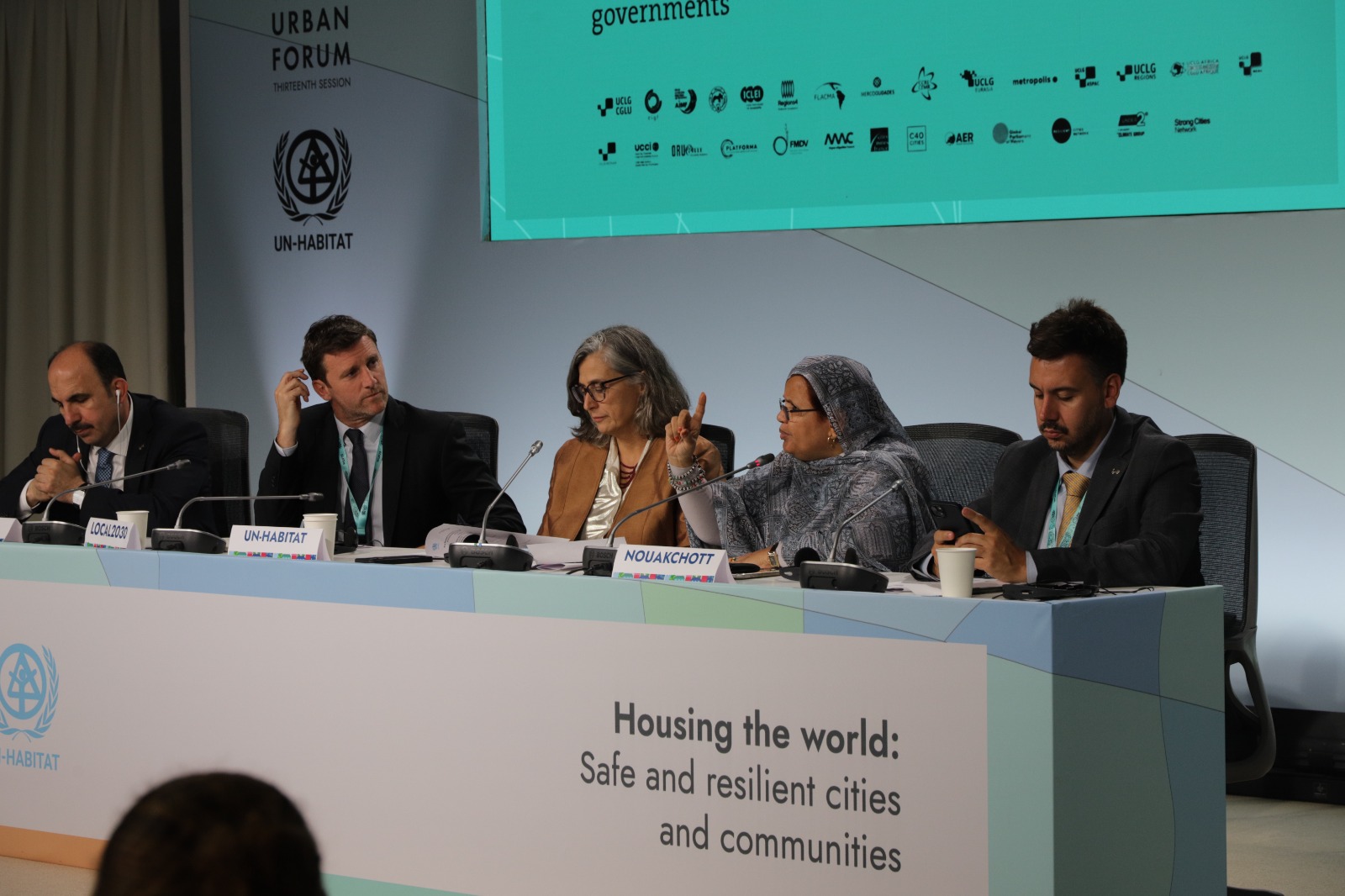
At WUF13, the Assembly took place at a pivotal moment for global governance. With the 2026 review of SDG 11 at the High-Level Political Forum (HLPF), the tenth anniversary of the New Urban Agenda, and the 2030 deadline approaching, the Assembly provided an opportunity to consolidate local leadership and advance through UCLG and the GTF a renewed vision for multilevel governance and local multilateralism. This perspective was reaffirmed by Clara Brugada, Head of Government of Mexico City and Co-President of the UCLG Committee:
“We defend decent and affordable housing as a fundamental human right, and as a way to make the right to the city a reality. The commitments we sign here must be translated into policies. The voices of our territories must come together in a united way, and UCLG is the platform that can make that articulation a reality.”
Held on Sunday, 17 May, the Assembly reaffirmed the political role of local and regional governments not only as implementers of global agendas, but also as co-creators of policy and custodians of a new social contract grounded in care, trust, and local democracy.
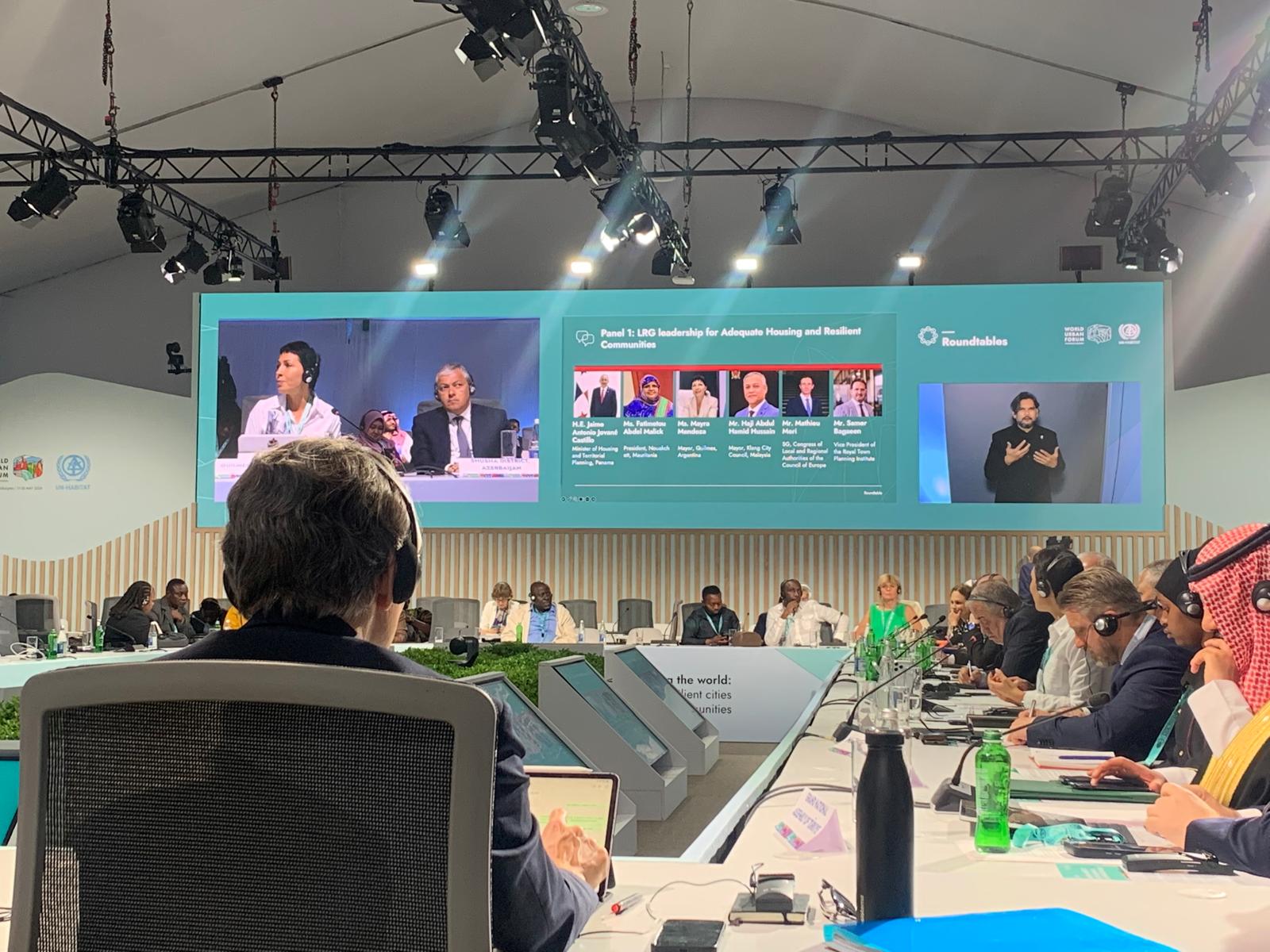
UCLG also co-organized the Local and Regional Governments (LRG) Roundtable alongside UN-Habitat, the UN Local2030 Coalition, and the Global Taskforce of Local and Regional Governments. Under the theme “Empowering Local Action for Adequate Housing and Resilient Communities: Strengthening Multilevel Governance for a Sustainable Future,” the roundtable created space to elevate local and regional government perspectives within global housing debates under the WUF13 framework. Mayra Mendoza, Mayor of Quilmes, stressed the importance of placing human rights at the centre of housing policies:
“Decent housing must be a human right, not a privilege, and it must be matched by the infrastructure and multilevel governance needed to deliver inclusion and justice.”
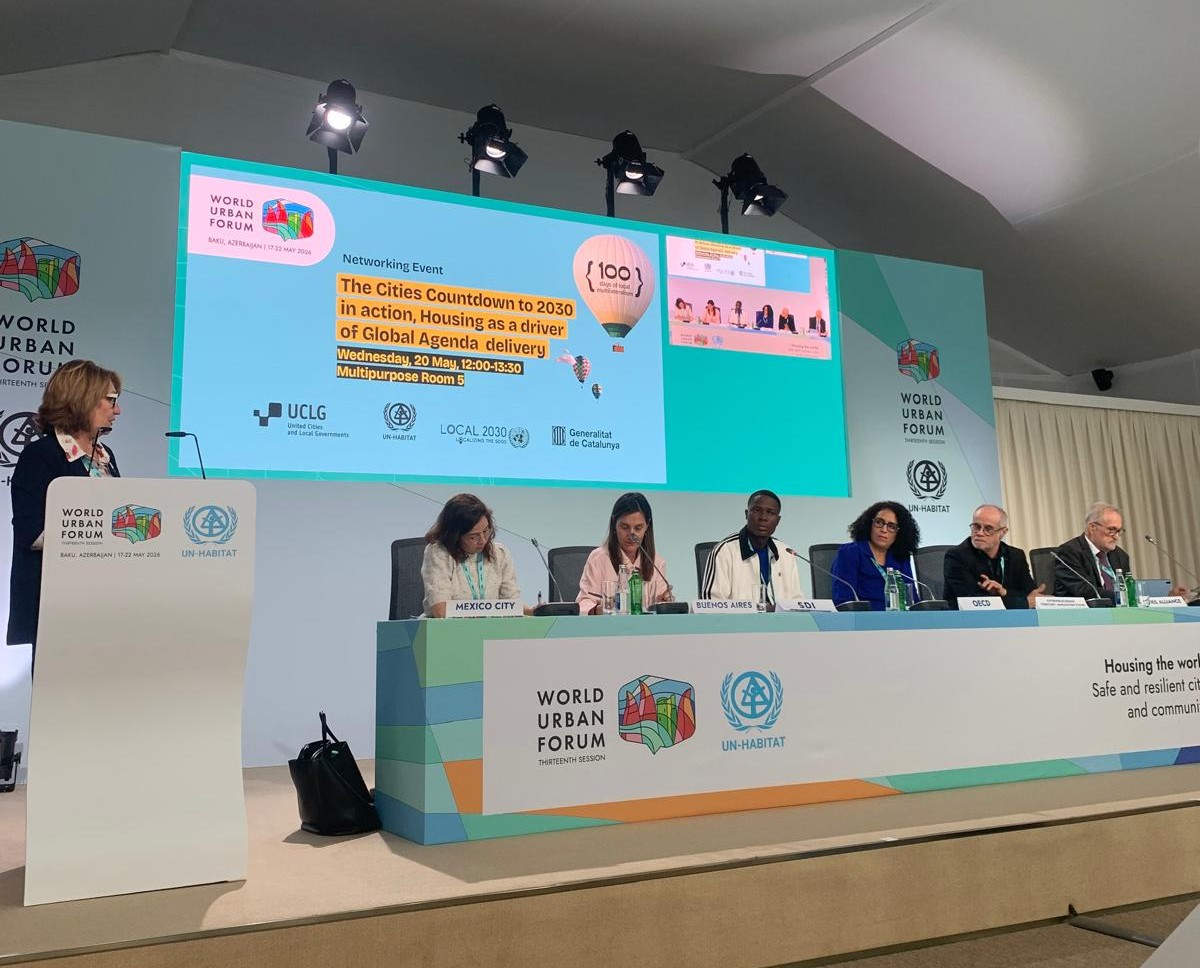
The UCLG networking event, “The Cities Countdown to 2030 in Action: Housing as a Driver of Global Agenda Delivery,” also shed light on the concrete actions being led by local and regional governments to accelerate SDG implementation. The event helped position the Cities Countdown to 2030 — UCLG’s flagship initiative — as both a political and programmatic framework for local delivery, reinforcing the role of local and regional governments as key actors in advancing global agendas.
Recognizing the Role of Local and Regional Governments in the Baku Call for Action
UCLG and the GTF participated in the Advisory Group for the Baku Call for Action, represented by Julia Guimarães, Policy Officer of the UCLG Committee on Social Inclusion, Participatory Democracy and Human Rights.
The Baku Call for Action is the main outcome document of WUF13: a stakeholder-led, unified statement consolidating key messages and commitments to advance access to adequate housing, strengthen urban resilience, and accelerate implementation of the New Urban Agenda.
The document recognizes local and regional governments as central actors in addressing the global housing crisis, explicitly stating that they are “at the frontline of urban transformation and delivery,” while often lacking the mandates, capacities, and resources needed to respond effectively.
Importantly, the Call goes beyond recognition by setting out concrete expectations for local and regional governments across the housing agenda. It urges Member States to empower them through decentralized financing, clearer institutional responsibilities, stronger local capacities, participatory planning tools, and multilevel governance mechanisms capable of connecting metropolitan, regional, and national action.
The Call also underscores the practical role of local and regional governments in planning and regulating land use, supporting in-situ upgrading, protecting communities against forced evictions, improving affordability, and ensuring that housing is integrated with essential services provision. In doing so, it places local action at the centre of implementation and strengthens the case for equipping cities and regions with the authority, financing, and tools needed to translate global commitments into tangible outcomes on the ground.
From Baku to Tangier and Beyond
As we move toward the UCLG Congress in Tangier, it is essential to place housing at the centre of the urban and development agenda. The housing crisis cannot be solved through construction alone; it requires urban planning, governance, and financing models that put people first and strengthen the social fabric of our cities.
Our Committee will continue to advance this vision, helping frame housing not only as a policy priority, but also as a shared commitment to participation, equality, and human rights — one that can guide the municipal movement in Tangier and beyond.