

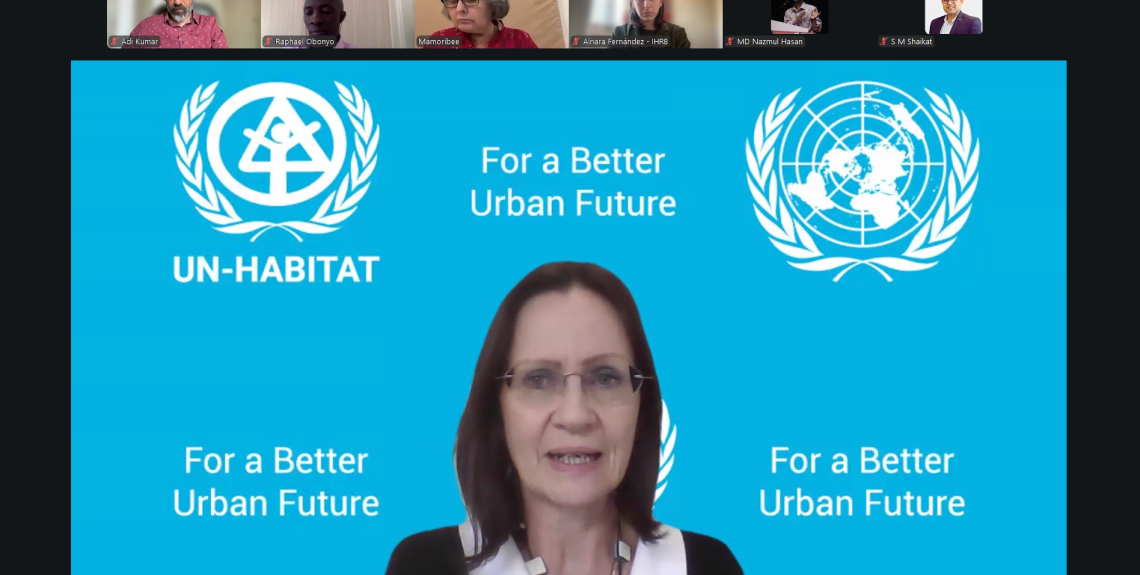
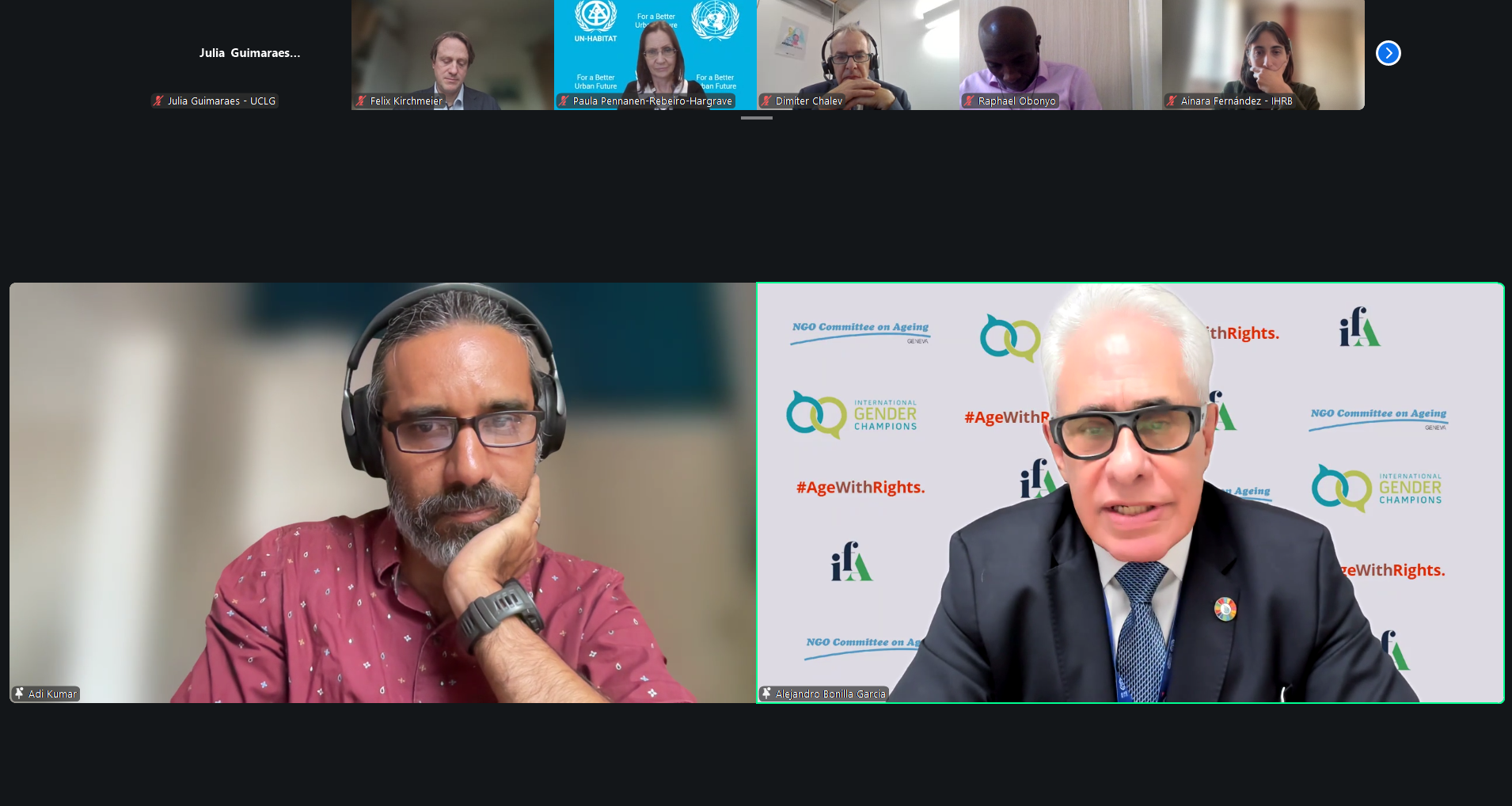
The Committee on Social Inclusion, Participatory Democracy and Human Rights (CISDPDH) of United Cities and Local Governments (UCLG) participated in the online Expert Group Meeting “Human Rights Cities: Cities where young people and older persons thrive together”, organised by UN-Habitat on 12 November 2026. The meeting brought together local and national authorities, children, young people, older persons, carers, human-rights defenders, urban professionals and UN representatives to advance rights-based approaches to urban development across the life course.
An intergenerational approach to urban rights
In a rapidly urbanising world in which more than 4.4 billion people already live in cities, including 1.3 billion young people aged 15–24, the meeting’s central premise is that cities should not address children, youth and older persons as separate constituencies. Instead, it should promote an intergenerational and life-course approach that recognises shared interests, mutual dependence and distinct needs across generations.
This approach has practical implications for local governance. Public spaces, transport networks and housing designed with children, caregivers and older persons in mind tend to be safer and more accessible for everyone. Similarly, integrated care systems can respond simultaneously to childcare needs and the support required by ageing residents, strengthening social cohesion while making better use of public resources.
Care was treated as a core element of intergenerational solidarity. Older women frequently provide care for grandchildren and ageing relatives while also needing support themselves, while young people are central to the workforce sustaining health, care and social services. Recognising care as a shared responsibility is therefore essential to building fairer and more sustainable cities.
Intergenerational cities in practice
The meeting was structured in two sessions. The morning session, “Foundations”, examined integrated policymaking, meaningful participation, intersectional data and alliances for age-responsive advocacy. The afternoon session, “Core themes”, focuses on adequate housing, accessible public space and mobility, age-responsive services, smart-city governance, and relationships across generations.
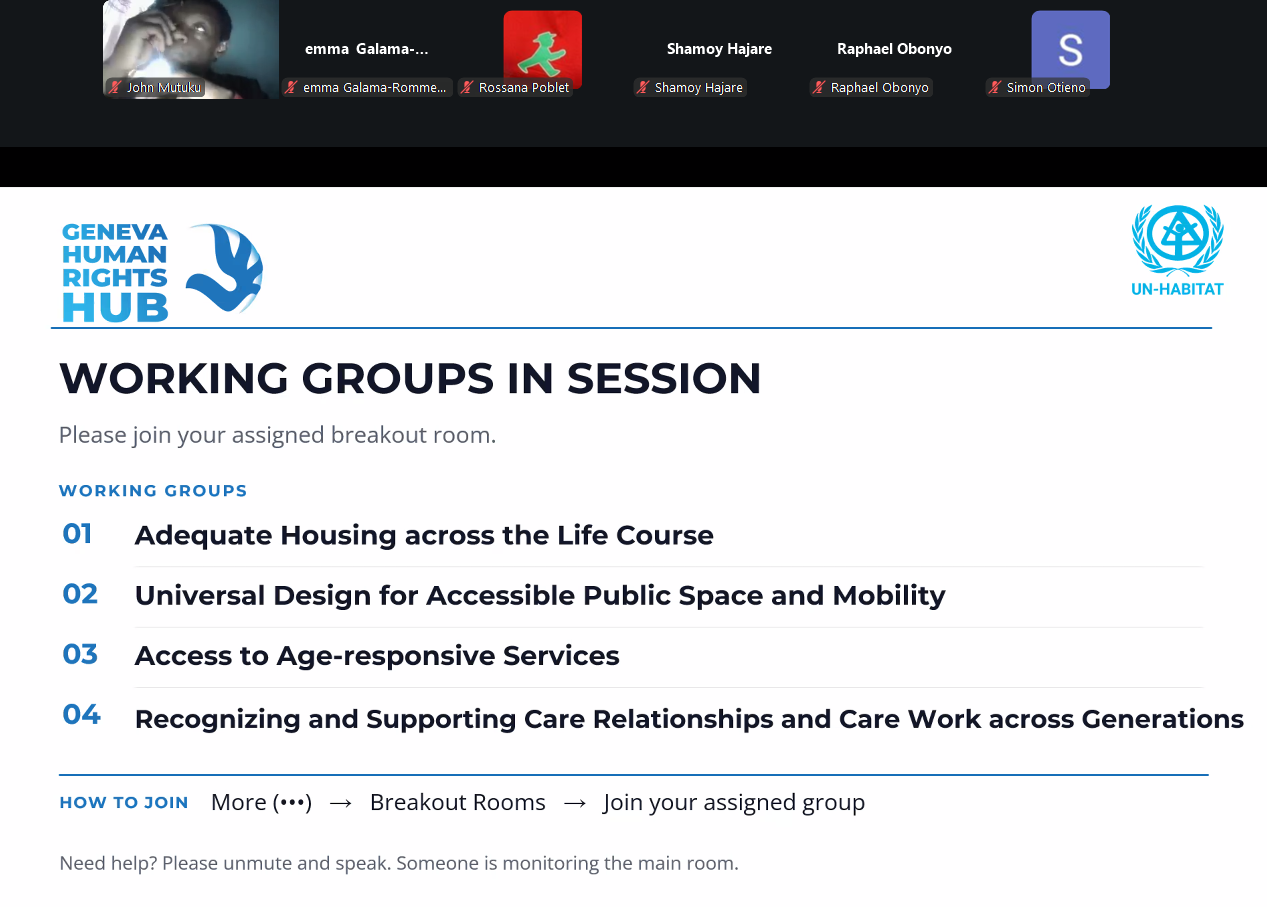
Adrià Duarte and Julia Guimarães from CISDPDH did the facilitation and reporting of two working groups in the afternoon session: adequate housing across the life course, and access to age-responsive services.
Some key messages emerged from both groups:
-
Housing affordability is essential to building inclusive, age-responsive cities.
-
Housing policies must consider care, proximity and people's needs across the life course.
-
Urban planning must address accessibility and the changing needs of ageing populations.
-
Traditional knowledge and climate-responsive architecture can contribute to more sustainable and affordable housing.
-
We need to move from designing services for people to designing services with people. Services cannot effectively reach young people and older persons if they are designed without their participation.
-
A smart city is not simply a digital city; it is a city that works for everyone and where technology is people-centered.
-
Intergenerational partnerships should move beyond dialogue towards concrete opportunities, shared learning and pathways to employment and leadership.
The discussion was grounded in the New Urban Agenda, which calls for people-centred, age- and gender-responsive urban policies and the meaningful participation of children, youth, older persons, persons with disabilities and other groups at risk of discrimination. It also reflected the commitments set out in SDG 11 to make cities and human settlements inclusive, safe, resilient and sustainable, as well as the broader objectives of the UN-Habitat Strategic Plan 2026–2029 to reduce inequalities and promote well-being across all ages. The meeting built on the momentum of the 13th World Urban Forum (WUF13), held in Baku in May 2026, and drew in particular on the discussions of the Roundtable on the Rights of Older Persons and the Children and Youth Assembly and Roundtable.
The expected outcome is a policy brief capturing priority concerns and recommendations to inform UN-Habitat’s work with Member States and future initiatives on human rights cities.
Local governments as key duty-bearers
For the CISDPDH, the meeting reinforces the role of local and regional governments as primary duty-bearers in the realisation of human rights in urban settings. Human Rights Cities integrate international human-rights standards into laws, budgets, planning, service delivery and everyday institutional practice, ensuring equality, dignity, autonomy and participation for all residents.
A shared agenda for inclusive cities
The session is aligned with the new Intergenerational Council promoted by UCLG, a permanent accountability mechanism for present and future generations, ensuring that youth leadership, long term responsibility and intergenerational justice shape the implementation of the UCLG Local Social Covenant.
CISDPDH participation reflects UCLG’s commitment to placing human rights, social inclusion and participatory democracy at the centre of urban governance. By connecting the experiences of children, young people and older persons, the Committee supports a vision of cities where all generations can live with dignity, access quality services, shape public decisions and contribute to community life.