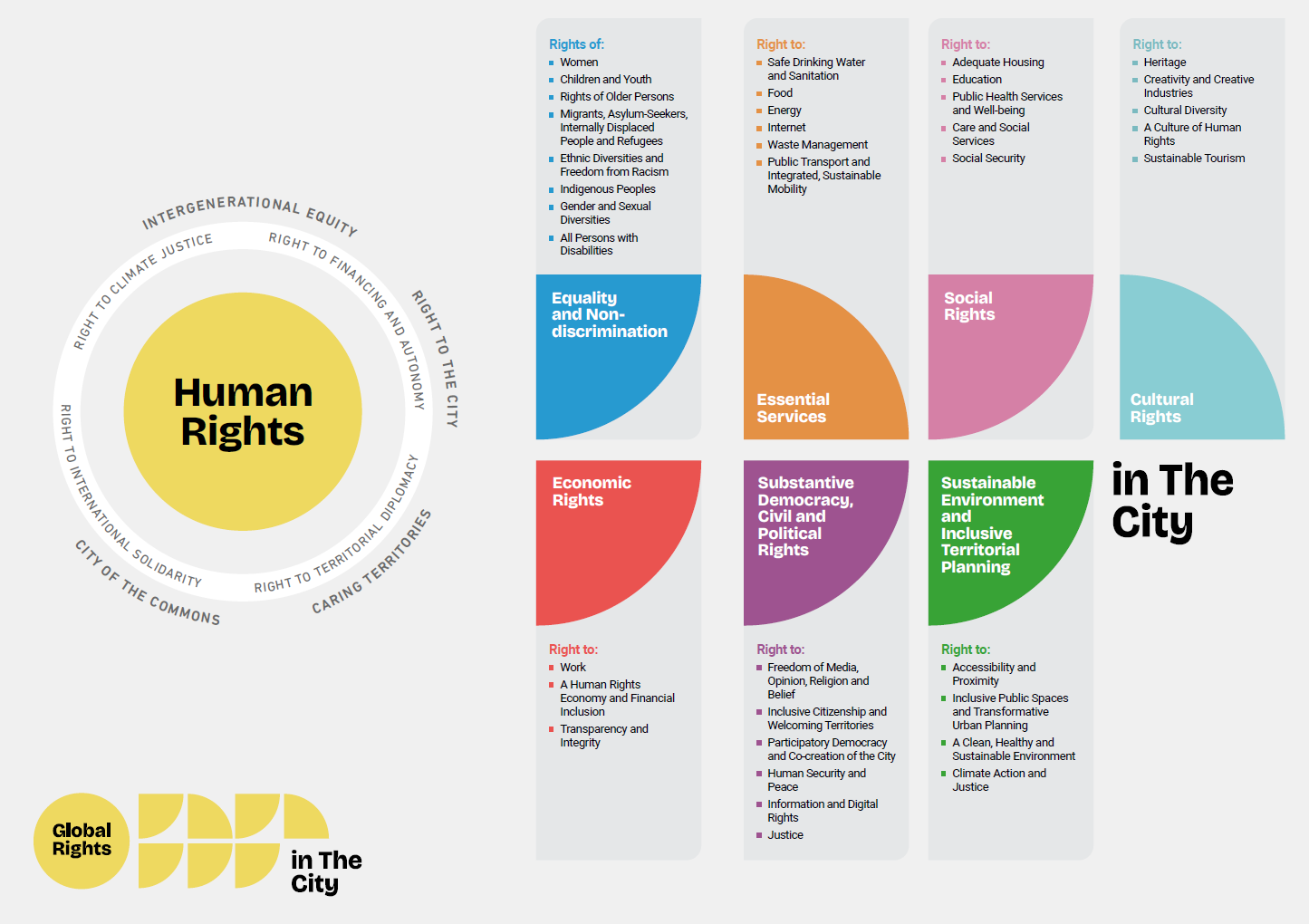
The New Global Charter-Agenda for Human Rights in the City is a political commitment and practical framework that empowers local and regional governments to place human rights at the heart of urban governance. Recognizing that the realization of human rights takes place where people live, work, and interact, the Charter promotes a human rights-based approach to public policies, services, and decision-making. It acknowledges cities as key actors in advancing democracy, equality, and social justice, while bridging the gap between international human rights commitments and their implementation at the local level.
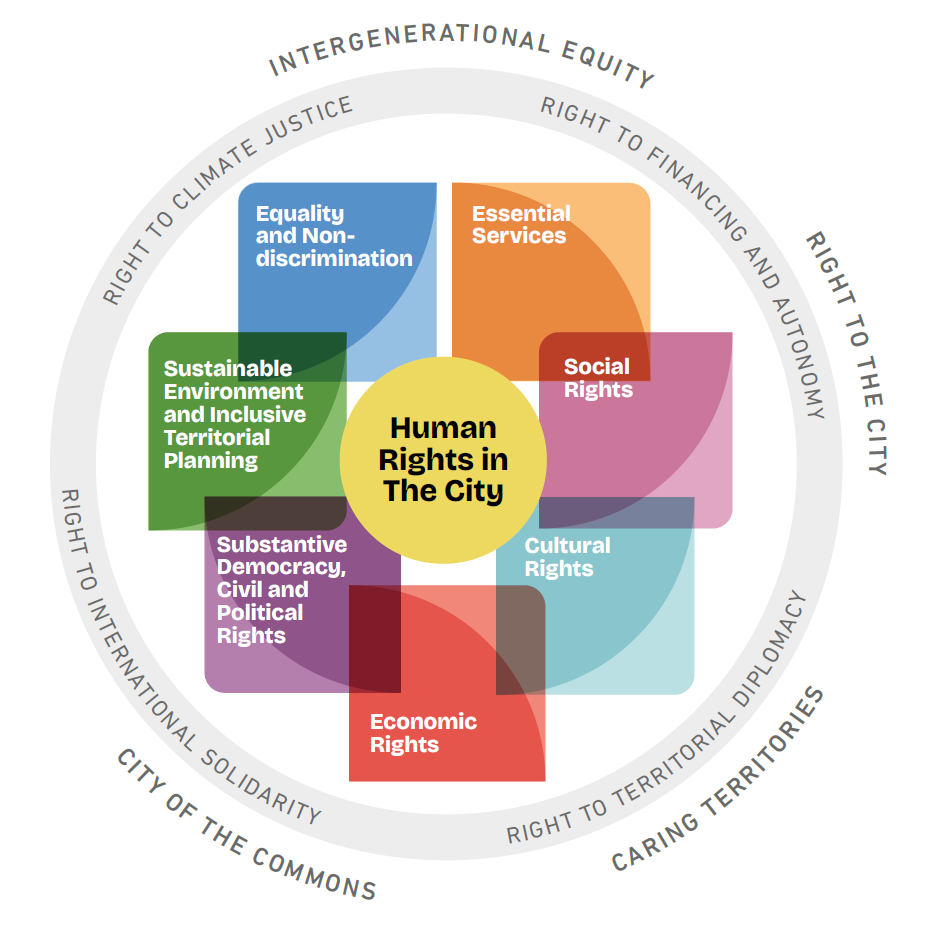
Developed through a broad participatory process involving local governments, civil society, academia, and international partners, the Charter provides a shared vision for building more inclusive, democratic, resilient, and caring communities. Organized around seven thematic clusters and recognizing 37 human rights, it integrates principles such as the Right to the City, Caring Territories, the City of the Commons, Feminist Municipalism and Intergenerational Equity. Finally, the Charter includes an eighth cluster on the Rights of Cities, recognizing that cities must also be endowed with the rights and enabling conditions that allow them to effectively fulfill their human rights obligations.
By strengthening local governance and fostering collaboration between institutions and communities, the Charter-Agenda serves as a roadmap for advancing human rights and shaping the cities of the future.