

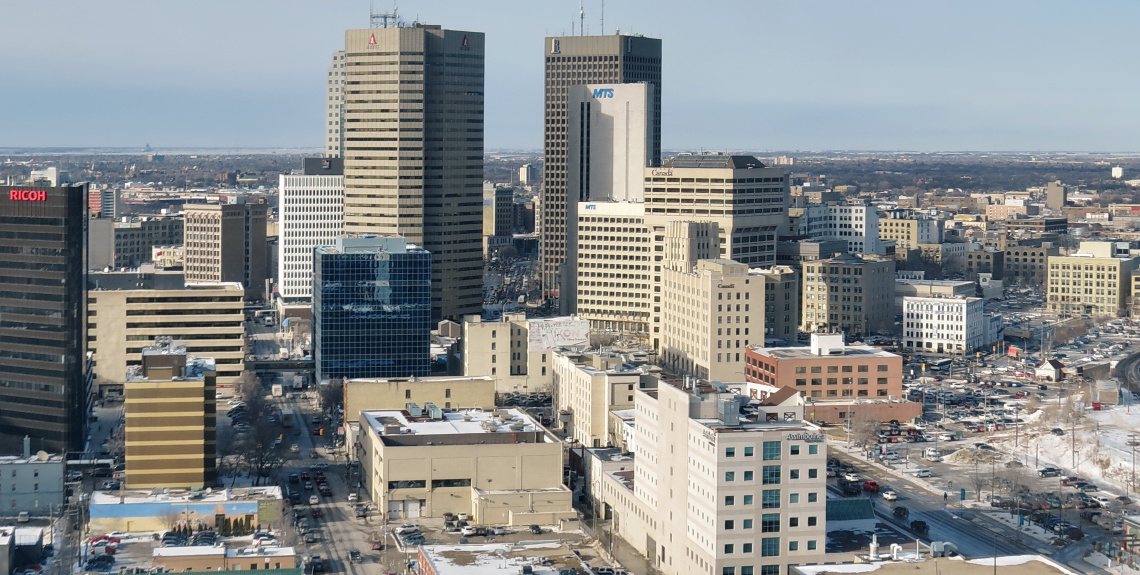
Winnipeg’s vision of a human rights city is not rooted in a label—it’s rooted in practice. While home to the Canadian Museum for Human Rights, the City understands that human rights leadership must be continually earned through action, accountability, transparency, and humility. Winnipeg does not claim perfection; like many cities, it faces challenges related to inequality, poverty, racism, intercultural competency, housing, and reconciliation. But it does claim responsibility—and a growing capacity—to act.
Cities are where human rights are most tangibly lived. Whether through housing, sanitation, mobility, or inclusion, it is local governments that shape the daily conditions in which dignity is either upheld or denied. In Winnipeg, human rights are not distant ideals but tools to guide local planning and municipal decision-making. The City has taken deliberate steps to embed rights-based approaches into its policies, programs, partnerships, and planning frameworks.
Following the 2018 municipal election, Winnipeg established the Human Rights Committee of Council, a governance body designed to bring international human rights obligations into civic decision-making and discourse. This committee reflects the City’s commitment to structural and lasting human rights governance—not just symbolic commitments, but formal processes and bodies to ensure accountability and results.
Winnipeg’s human rights work is also grounded in global frameworks. In 2021, the City completed a Voluntary Local Review (VLR) of its progress on the United Nations Sustainable Development Goals (SDGs), in partnership with the United Way of Winnipeg and the International Institute for Sustainable Development. Although Winnipeg has never formally submitted an application to become a UCLG-designated human rights city, its actions— prioritizing transparency, measurable outcomes, and community engagement—reflect the substance of that designation.
This alignment is formalized in OurWinnipeg 2045, the City’s long-range development plan, and foremost policy document, a requirement of the City’s Charter, which explicitly localizes the SDGs. It positions equity, sustainability, and wellbeing as core human rights priorities, and integrates them across housing, transportation, environmental stewardship, and governance. The accompanying Complete Communities strategy ensures equitable access to services and opportunity, addressing the social determinants of health: housing, food, water, income, education, and recreation.
The City’s commitment is evident in rights-based initiatives like Amoowigamig, an Indigenous-led public washroom affirming the human right to sanitation and Indigenous leadership in service delivery. Similarly, the Welcoming Winnipeg policy provides a framework for renaming places and removing historical commemorations that have excluded Indigenous voices— advancing the right to cultural inclusion. Winnipeg Newcomer Welcome & Inclusion Policy, commitment to U.N. Safe Cities, and more.
Winnipeg also applies human rights principles to its economic practices. Its Sustainable Procurement Program, grounded in a network of policies such as the Poverty Reduction Strategy, Climate Action Plan, and Indigenous Accord, prioritizes ethical, social, environmental, and Indigenous outcomes. The program supports equity-deserving suppliers, upholds international labour standards ensuring no forced labour or child labour across all procurement processes, and incorporates complaint mechanisms to ensure accountability within the four pillars prioritized within the program.
Housing is another area where Winnipeg acts on its human rights commitments. The City’s Housing Action Plan aims to deliver over 14,000 new homes by 2026, emphasizing affordability, Indigenous partnerships, and inclusive growth—recognizing housing as a basic human right, not just infrastructure.
Importantly, Winnipeg understands that human rights work does not happen in isolation. The City advocates for structured intergovernmental coordination, co-developed tools and indicators, and municipal inclusion in national and international human rights reporting. Winnipeg also supports the creation of local human rights focal points and values Indigenous law, and ways of knowing, being, and doing as integral to a more just governance framework.
In conclusion, Winnipeg’s vision is clear: to be a city where human rights are not only protected, but actively advanced through collaboration, inclusion, and structural reform. Rather than seeking a title, Winnipeg strives to earn its human rights city status through consistent action—rooted in community, accountable to residents, aligned with global standards and structural and governance innovation. Human rights, for Winnipeg, are not abstract—they are the blueprint for building a more equitable, sustainable, and inclusive city for all.
Winnipeg ‘s interest in joining the United Cities and Local Governments (UCLG) Human Rights Cities campaign is rooted in a desire to match local practice with global recognition. Through deliberate action, policy innovation, and community partnerships, Winnipeg has been building the foundation of a human rights city since 2018. What emerged clearly from the January 14, 2025, conversation hosted by the Human Rights Committee of Council is that meaningful action needs visibility, structure, and external validation—not for recognition’s sake, but to build momentum, ensure accountability, and sustain progress of human rights in Winnipeg. In 2025, Winnipeg initiated a more robust workplan, and intends to gather more strength, with more partners, human rights dialogue activities throughout 2025/26 and work with Community to structure another review and human Rights impact assessment. Joining the UCLG campaign presents an opportunity to bring these efforts into alignment, benefit from international best practices, and benchmark Winnipeg’s progress alongside other leading human rights cities.