

Why are local and regional governments essential for promoting, fulfilling, and respecting human rights?
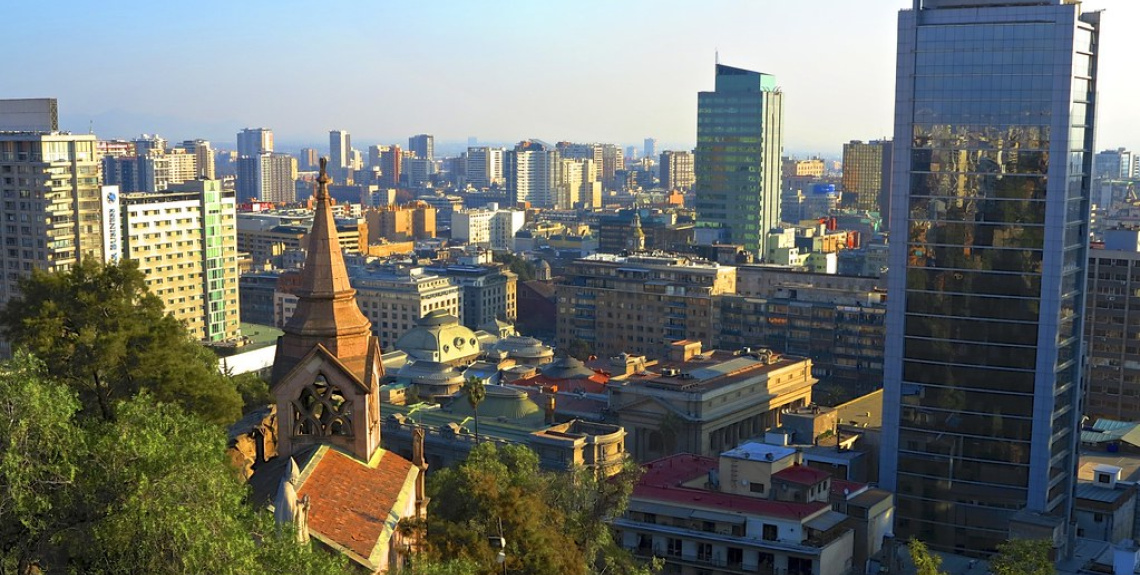
Local governments are essential for fulfilling and respecting human rights since they are the first link that people in a given territory have with governments, who can know and understand their needs and demands. In Santiago de Chile, the Constituent Mayoralty project that led Mayor Irací Hassler to win the municipal elections was founded on the establishment of an egalitarian use of the city. This implies a change in the dynamics in which people inhabit public and private spaces, as well as an understanding that local communities can work to reduce gender gaps, improve access to services, develop strategies for harmonious coexistence among all people, co-manage policies, and ensure quality education with a non-sexist and non-discriminatory approach.
In this way, local and regional governments can foster the creation of a community fabric that strengthens resilience in the face of adverse situations (natural disasters, pandemics, etc.) and promotes Human Rights across the board.
Why are human rights relevant values and a useful framework for guiding local action?
Our city is a landscape crossed by multiple inequalities, like many capitals around the world, where various dynamics of exclusion are expressed: racism, xenophobia, ableism, sexism, homo-lesbo-transphobia, etc. All of these are also influenced by the prevailing model, where gender relations have been organized hierarchically, giving supremacy to the masculine over the feminine and also over other identities outside the binary. Various analyses from feminist and intersectional paradigms highlight the importance of different spaces of power—here, the local government—in reversing, concealing, or reproducing these models of exclusion through public policies, which, far from being neutral, respond to a particular interpretation of reality and can reinforce various inequalities or, conversely, reduce and repair existing opportunity gaps.
To counter all of the above, the municipality develops initiatives for training, self-care, and community support, in order to help reduce the precariousness of people’s lives, particularly women and other historically excluded groups, who take on unpaid labor roles, have precarious jobs, and are constantly faced with obstacles to the full exercise of their rights and well-being. We work by strengthening their leadership, civic participation, emotional well-being, and training in trades that can help sustain their lives, seeking to dismantle welfare-based logic and instead focus on training that fosters co-management, in which participants of the initiative are also able to replicate it in their own spaces.
As part of this transformative project, the Sub-directorate for Gender Equality, Sexual Diversity and Inclusion was created in our municipality to promote and adjust municipal programs and policies for the cross-cutting incorporation of gender perspective, diversity, and Human Rights, based on the principles of inclusion and non-discrimination, with the aim of turning the municipality into an active agent of change to reduce sexism and discrimination. This team consists of highly qualified personnel for this work, most of whom come from social activism in these same areas, enriching territorial knowledge and understanding of how these issues can be addressed.
-
Casa Igualdad: A space for care and co-management that will address critical issues resulting from the post-pandemic crisis, specifically: care and caregivers crisis, mental health, and unemployment among women, the LGBTIQA+ community, migrants, and people with disabilities.
Since March 2023, the following service areas have been operating at Casa Igualdad: Care Brigade, Psychological Care, Physical Therapy, Trans Support, Migrant Medication, Office Against Violence and Discrimination, Workshops, Trainings, Self-Care, Community Spaces, and other activities for which the space will be available.
-
Comprehensive education with a gender approach included in the Annual Municipal Educational Development Plan: seeks to promote non-sexist education in the municipality’s educational institutions. This includes comprehensive sexual education that rejects gender stereotypes and, among other things, highlights female role models in science and in all areas of knowledge and human endeavor.