

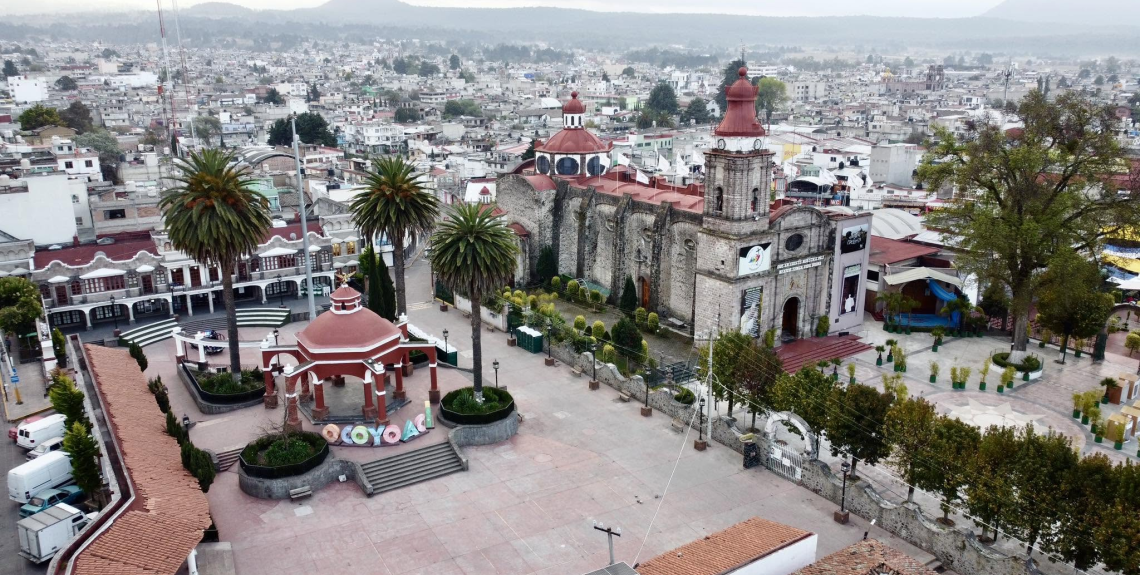
The Municipality of Ocoyoacac fully shares the vision of the campaign “10, 100, 1000 Human Rights Cities and Territories by 2030”, recognizing that local governments play a fundamental role in promoting, protecting, respecting, and guaranteeing human rights. As the level of government closest to people, municipalities have the capacity to directly identify the needs of the population, generate timely solutions, and develop public policies that contribute to collective well-being. In this sense, Ocoyoacac considers that human rights constitute the foundation for inclusive, transparent, and results-oriented public management that positively impacts the daily lives of citizens.
Our vision focuses on placing people at the center of governmental action, ensuring at all times respect for human dignity and equal access to opportunities and services. Ocoyoacac is a municipality committed to addressing the needs of the population through policies and programmes aimed at improving the quality of life of all social sectors, paying special attention to groups in vulnerable situations, including children and adolescents, women, older persons, persons with disabilities, Indigenous communities, the LGBT+ community, and people facing conditions of inequality or exclusion. We are convinced that a fairer society is built by ensuring that no one is left behind and that all people can fully exercise their rights.
For our municipality, human rights represent much more than a set of legal principles; they constitute a framework of values that guides the planning, implementation, and evaluation of governmental actions. Their approach makes it possible to strengthen equality, citizen participation, inclusion, non-discrimination, and accountability, while also providing tools to identify priorities and respond effectively to local challenges. Therefore, human rights are an essential reference for guiding public action and consolidating a development model centered on people.
Likewise, Ocoyoacac maintains a strong commitment to sustainable development, understanding that the well-being of present and future generations depends on the balance between social development, environmental protection, and the strengthening of the local economy. Our administration promotes actions that contribute to the conservation of natural resources, social inclusion, the creation of economic opportunities, and the construction of resilient communities, recognizing that sustainable development and human rights are inseparable and mutually reinforcing objectives.
In line with this vision, the objectives established by each administrative area within the Municipal Development Plan 2025–2027 are aimed at fulfilling human rights and aligned with the principles of sustainable development. Each department contributes, within the scope of its responsibilities, to guaranteeing equitable access to public services, strengthening citizen participation, promoting substantive equality, and creating conditions for the comprehensive development of individuals. Through this cross-cutting commitment, Ocoyoacac reaffirms its will to consolidate itself as a human rights territory, joining international efforts to build more inclusive, sustainable, resilient communities that respect human dignity towards 2030.
The Municipality of Ocoyoacac wishes to join the campaign “10, 100, 1000 Human Rights Cities and Territories by 2030” because it shares the conviction that human rights must be the cross-cutting foundation of local public management. This initiative represents an opportunity to strengthen institutional capacities, exchange good practices with other governments, and consolidate people-centered public policies.
It will also allow us to reinforce our commitment to inclusion, equality, citizen participation, and sustainable development. Ocoyoacac seeks to actively contribute to building fairer, more resilient communities that respect human dignity.
In the Municipality of Ocoyoacac, we have implemented actions and public policies in favour of the human rights of our inhabitants. These include:
1. Protocol for the Care and Prevention of Violence against Women by Age Group
In the Municipality of Ocoyoacac, the Protocol for the Care and Prevention of Violence against Women by Age Group was developed through the Municipal Human Rights Ombudsperson’s Office. Its objective is to guarantee differentiated, equitable, and appropriate assistance to women users of the different municipal departments and educational centres, according to their needs and stage of life, promoting full respect for their human rights and reducing structural inequalities linked to age.
The protocol includes the identification of obstacles and specific needs of women according to their age group; the implementation of specialized care mechanisms for girls, adolescents, young people, adults, and older persons; the training of public servants in human rights approaches, non-discrimination, and intersectionality; the strengthening of institutional infrastructure to guarantee accessibility and specialized care; and the creation of monitoring and evaluation systems to ensure continuous improvement of services.
Due to its innovative nature and its contribution to strengthening women’s human rights, this instrument received First Place in the Public Policies in the Design Phase category of the Ninth Edition of the IAPEM Award for Municipal Management 2025.
2. Municipal Programme for the Social Prevention of Violence and Crime
With the aim of promoting people’s right to live in safe, peaceful, and resilient environments, the Municipality of Ocoyoacac implemented the “Municipal Programme for the Social Prevention of Violence and Crime”, through which three Peace Territories were identified in different areas of the municipality.
This programme seeks to strengthen social cohesion, citizen participation, and the culture of peace through comprehensive prevention actions. As part of its strategies, the campaign “Orange Points” was developed, establishing 100 safe points in shops and establishments within the municipality’s communities and towns to provide support and guidance in situations of risk.
Likewise, in coordination with the Secretariat of Security of the State of Mexico, the Social Crime Prevention and Delinquency Prevention Fair was organized, benefiting approximately 500 people through information and awareness-raising activities on citizen security, crime prevention, and reporting mechanisms.
The “Safe Station” programme was also implemented, through which three bus stations were rehabilitated and emergency numbers and direct contact information with municipal authorities were installed, strengthening the safety of public transport users.
These actions were complemented by the municipality’s adherence to the National Peace and Security Plan, strengthening inter-institutional coordination, prevention measures, and community-based policing. As a result, during 2025, a significant reduction in municipal crime incidence was recorded, decreasing from 26.7% to 4.3%.
3. Sixth Intermunicipal Meeting on Public Policies for the LGBTTTIQ+ Community
With the objective of promoting inclusion, equality, and respect for diversity, the Municipality of Ocoyoacac held the 6th Intermunicipal Meeting on Public Policies for the LGBTTTIQ+ Community, consolidating it as a space for dialogue, exchange of experiences, and the development of strategies to guarantee the human rights of people of diverse sexual orientations and gender identities.
Representatives from the three levels of government participated in this meeting, including the Secretariat of Women, representatives of Deputy Luisa Esmeralda Navarro Hernández, civil society organizations such as Fuera del Clóset, heads of diversity departments from different municipalities in the region, and various municipal public administration bodies, including the Municipal Human Rights Ombudsperson’s Office, the Civil Registry, the Women’s Department, the Youth Department, and members of the Municipal Council.
During the event, topics related to inclusion, non-discrimination, and the institutional actions developed by each department to support populations in vulnerable situations, particularly the LGBT+ community, were addressed. Participants also learned about the programmes and services available for the protection and guarantee of their rights.
The meeting was complemented by inclusive cultural activities, including a gender-neutral clothing fashion show, a theatre performance focused on raising awareness about the dignified treatment of women, and folkloric ballet presentations, strengthening the recognition of diversity and the construction of a more inclusive society that respects human rights.